The Townsend Water Tower

Balancing Growth, Regulations, and Your Home’s Plumbing

April 30, 2026

Around Townsend lately, the conversation has frequently turned toward our changing skyline. As we move forward with necessary upgrades to our municipal water system, it is natural for residents to have questions about the "why" and the "how." As a neighbor and professional invested in Townsend real estate and planning, I want to provide a neutral, fact-based overview of how these improvements protect our community’s future and, just as importantly, your home’s value.

The Necessity: Growth by the Numbers

Townsend is not just a place we live; it is a community with a legacy. To understand our current infrastructure needs, we have to look at our trajectory. While Townsend was founded in the mid-1860s as a mining and agriculture hub, it actually transitioned into the residential community we recognize today back at mid-century. From my research of the residential homes in town, 65% of them were built between 1950 and 2026. This established residential identity is exactly why we must modernize our core services.
In developing the 2025 Growth Policy, the City took a hard look at the data. This update, which builds upon the foundation of the 2010 Growth Policy as part of a state-mandated five-year review cycle, is driven by several unavoidable factors.

Why Now?

  • The Scale of Growth: Since the last major policy update, Townsend has seen significant population increases and a wave of new subdivision approvals.
  • A Representative Snapshot: The City received input from residents, where infrastructure—specifically roads and water—was identified as a top priority for improvement.
  • Legal Mandates: While 54% of survey respondents feel there has been "too much" residential growth, the City is legally required by the Montana Subdivision and Platting Act (1973) to review and manage development while maintaining "existing levels of service" for all current residents.
  • Ensuring Reliability: The 2025 policy is designed to provide guidance for the next 5 to 10 years, ensuring that as more people are drawn to our "small-town feel," the pipes beneath our feet don't fail us.

Meeting the Standard: DEQ and State Requirements
Upgrading a water tower is a major undertaking, and it is governed by more than just local preference. The project ensures we stay in compliance with Montana State Statute (MCA 76-1-601) and the "Sanitation in Subdivisions Act."
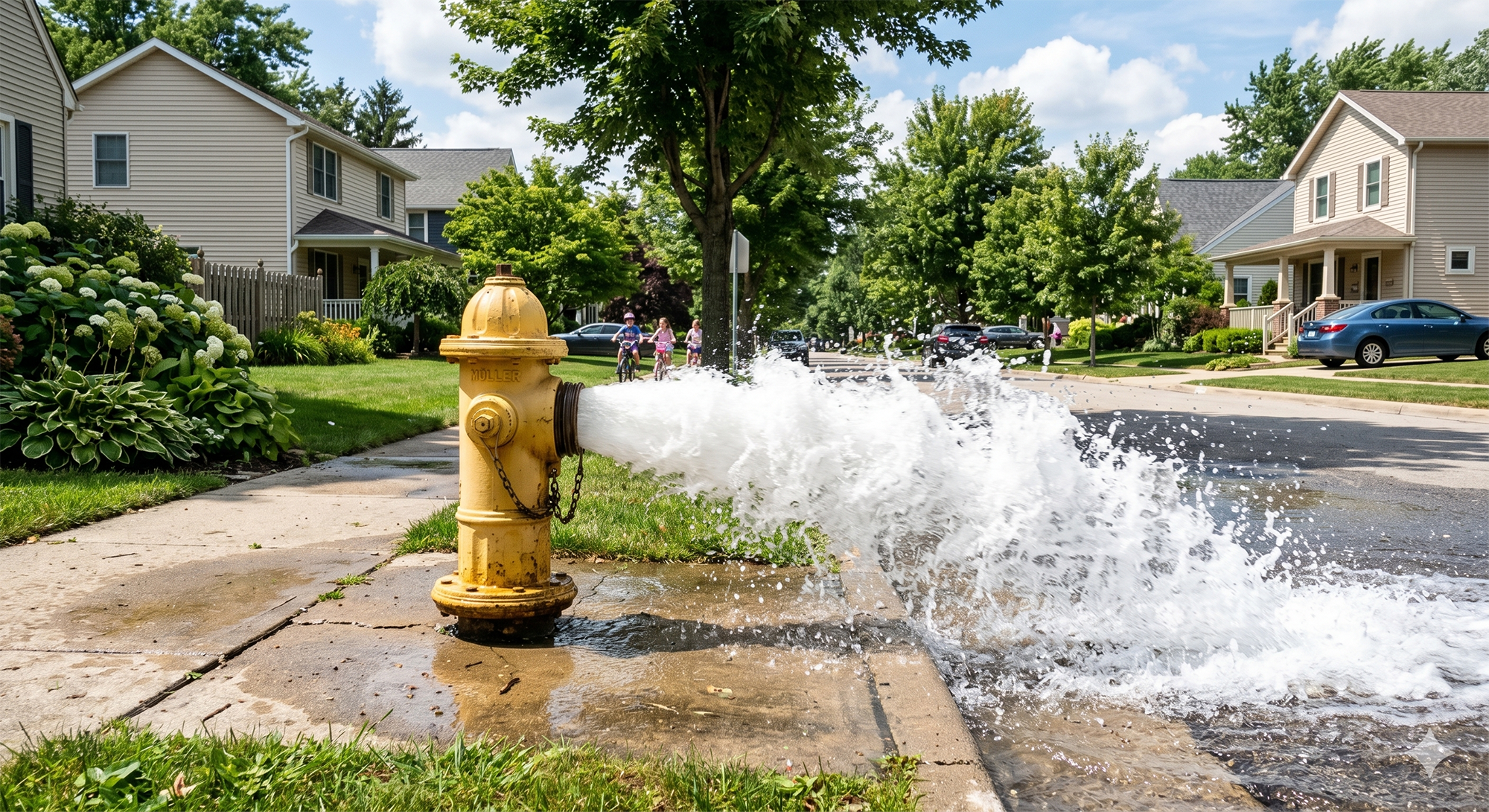
One of the most critical metrics for any city is "fire flow"—the ability to deliver high volumes of water to hydrants instantly during an emergency. In our community survey, the "Availability of Emergency Services" was ranked as "Extremely Important" by the majority of respondents. To meet Department of Environmental Quality (DEQ) safety standards, our infrastructure must provide the consistent pressure required for modern firefighting. This project isn't just about water in your tap; it’s about the safety of every historic structure on Broadway and every new family home in our subdivisions.
Fire hydrant

The Pressure Question: What It Means for Older Homes

Townsend’s history is reflected in its architecture, with many homes featuring plumbing systems that date back decades—or even a century. As we modernize our system to support the community's vision of a "safe and welcoming environment," we must address the reality of increased water pressure.
In the world of real estate, high water pressure is a frequent "red flag" on home inspection reports. If left unmanaged, it can strain older joints and lead to costly repairs that diminish property value.

Technical Corner

Water towers use gravity to create pressure. The higher the tank, the more potential energy is converted into pressure (PSI) at your tap. While higher pressure is essential for providing modern fire protection and reaching new, higher-elevation subdivisions, it can place stress on older, historic plumbing.

Understanding "Head Pressure"

Municipal water pressure is primarily a result of "head pressure"—the weight of water stored at height. Because the new tower is designed to meet modern DEQ standards for fire flow and service for 2,000+ residents, it sits higher and holds more volume than our older, mid-century infrastructure. While this provides the consistent flow needed for high-efficiency appliances and emergency services, it can result in higher PSI (pounds per square inch) at your home’s intake.

Solutions and Mitigation: The Pressure Reducing Valve (PRV)
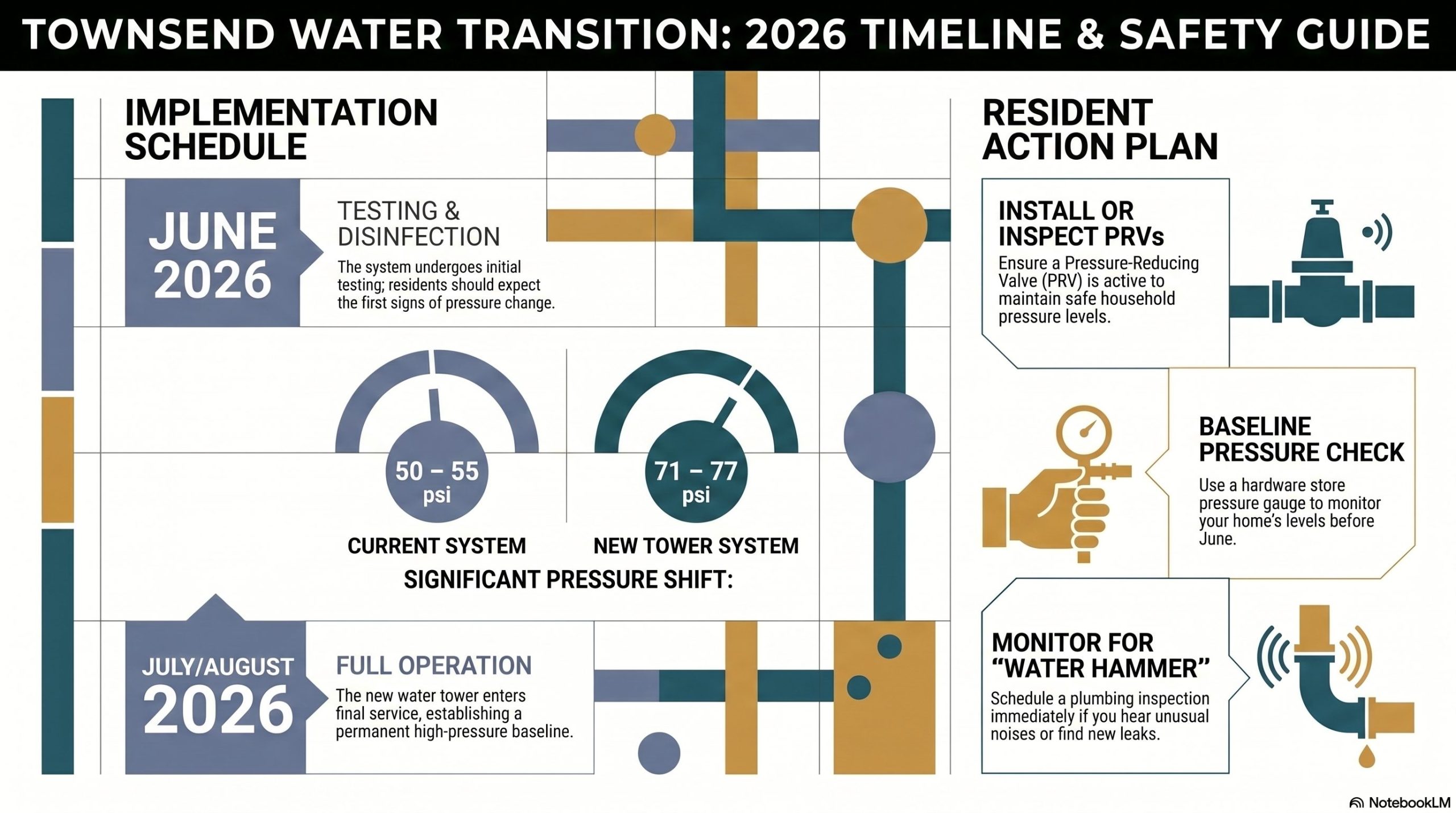
For owners of Townsend’s historic properties, the solution is simple and standard: the Pressure Reducing Valve (PRV). Think of a PRV as a "security guard" for your home. It protects your property values by ensuring your internal plumbing only experiences the pressure it was designed to handle.
From a real estate perspective, the ROI on a PRV is undeniable. The cost of installation is negligible compared to the thousands of dollars in damage caused by a burst pipe or the "plumbing red flags" that can stall a home sale. This is a standard industry practice in towns with varying elevations or updated high-capacity towers.
I'm a Townsend resident working through this pressure dilemma myself, so I 1000% understand how the need for a licensed professional to install these PRVs will impact those who are income restrictive. My very best suggestion is to simply check-in on your neighbors and see what we can do to help each other out! I've heard rumor of a few plumbers who would be willing to do a discounted installation and I wouldn't be opposed to organizing a group of homeowners needing the work done and negotiating a better rate.
unnamed

Resources and Community Vision

Our water infrastructure directly correlates with the City of Townsend Vision Statement. By investing in this project, we are supporting the three pillars that make our town a destination for those who love Canyon Ferry Lake and the Missouri River:
  1. Safety: Meeting the "extremely important" community demand for reliable fire and emergency services.
  2. Sustainability: Building high-quality infrastructure designed to serve the community for another 50 years, preserving our resources for the next generation.
  3. Economic Vitality: Providing the necessary framework for the "business growth" and "affordable housing" that residents prioritized in the survey.

A Vibrant Future for All

While new infrastructure can feel like a daunting change, it provides the framework for meaningful decision-making that allows us to grow without losing the small-town charm we cherish. By modernizing our water system and taking individual steps to protect our historic homes, we ensure that Townsend remains a safe, sustainable, and vibrant place to live, work, and play for years to come. If you'd like to discuss the new water tower further, let's grab a coffee!
Listen to Blog
More to Read
white barn in mountainscape bozeman montana

What’s the Current Housing Market Like?

August 8, 2025

What’s the Current Housing Market Like? A Look at Buyer […]

Read

Energy Efficiency for the Winter: Simple Ways to Seal Your Home and Save on Bills

September 23, 2025

Energy Efficiency for the Winter Simple Ways to Seal Your […]

Read

A Deep Dive into Montana’s New Property Tax Laws

August 21, 2025

A Deep Dive into Montana’s New Property Tax Laws What […]

Read

Homeowner’s Guide to Fall Lawn & Garden Prep: Fortifying for a Montana Winter

September 30, 2025

Homeowner’s Guide to Fall Lawn & Garden Prep Fortifying for […]

Read

Fall Porch Perfection: Decorating Your Home with Mums, Pumpkins, and More!

September 1, 2025

Fall Porch Perfection Decorating Your Home with Mums, Pumpkins, and […]

Read