
Happy New Year! While many of us were ringing in 2026, a major shift in Montana real estate law officially went into effect. If you are planning to buy land, build a home, or drill a well this year, you need to pay attention.
As of January 1, 2026, House Bill 681 (HB 681) has fundamentally changed the process for obtaining a water right for a standard household well. The days of Taylor Sheridan's 1923-style "drill first, paper later" are over. Here is a simplified breakdown of what has changed, what an "exempt well" actually is, and how to protect yourself.
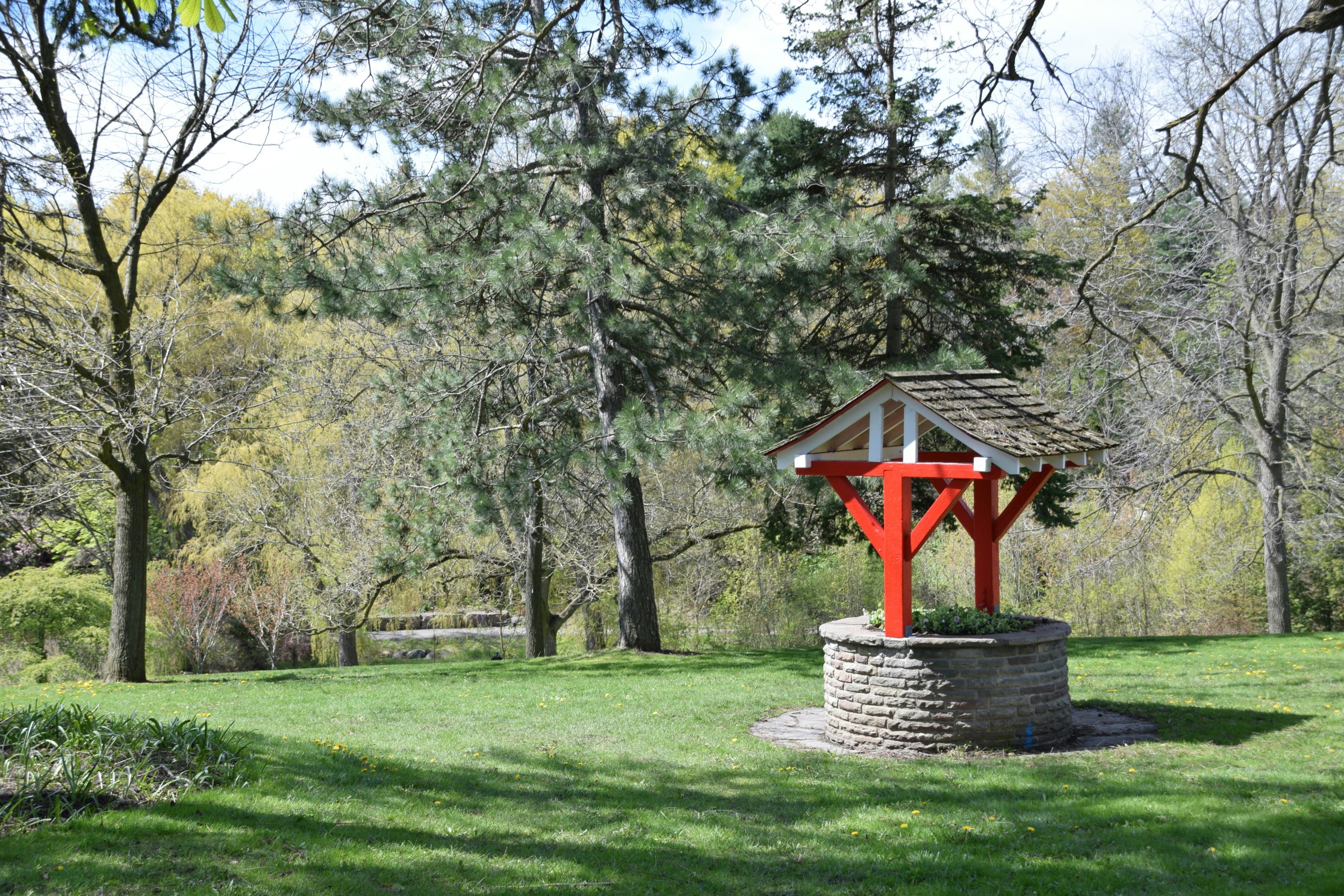
First, The Basics: What is an "Exempt Well"?
To understand the law, you have to understand the definition. In Montana, you don't need a full-blown water permit for small, domestic uses. Instead, you qualify for an "exception" (commonly called an exempt well) if your water use meets two strict criteria:
-
Flow Rate: It pumps 35 gallons per minute (GPM) or less.
-
Volume: It uses no more than 10 acre-feet of water per year.
For decades, this exemption allowed homeowners to bypass the expensive and lengthy state permitting process. You simply drilled your well and filed the paperwork later. That has now changed.
Notes on Volume & Why It Matters
When we read a limit of 10 acre-feet of water per year, what is your reaction? Is it "Ok, cool... but what the heck does that mean?!" I'm glad you asked because I also had trouble visualizing this myself.
How I had it explained to me is – Imagine a standard football field (without the end zones). If you flooded that entire field with one foot of water, that is one acre-foot (roughly, just go with me here for a sec). Now, stack 10 of those on top of each other. That is your annual limit. In real numbers, one acre-foot is approximately 325,851 gallons. So, your 10 acre-foot limit allows you to pump about 3.26 million gallons of water per year! WOWZA!
Now you must be asking yourself, "Is that enough for my home?" Absolutely. It is massive. So, why does the limit matter? For a single family, 10 acre-feet is nearly impossible to use up unless you are filling a private lake or watering a golf course. The limit becomes a problem for subdivisions. Because of the "Combined Appropriation" rule, a developer might have to split that single 10 acre-foot "pie" between 10 or 20 different lots. If you buy the 21st lot, the pie might be gone. We'll talk more about that below.
The "Old Way" vs. The "New Way"
The Old Way (Pre-2026)
The process was reactive. You could buy land, hire a driller, complete the well, and then file a "Notice of Completion" (Form 602) with the Department of Natural Resources and Conservation (DNRC) to get your water right certificate.
The New Way (Effective Jan 1, 2026)
Under HB 681, the process is now proactive. You must file a "Notice of Intent" with the DNRC and get it approved before you put any water to use.
-
The Timeline: Once you file a correct and complete Notice of Intent, the DNRC has 10 business days to review it.
-
The Expiration: An approved Notice of Intent is valid for 5 years (with a potential one-time extension), giving you a secure window to build and drill or for a buyer to drill after you sell (if it's within that time frame).
Why the Change?
Why the extra red tape? The state is trying to prevent over-use through something called "Combined Appropriation."
Here is the issue: State law says that a group of wells drawing from the same source (like in a subdivision) cannot exceed that 10 acre-feet limit combined if they were part of the same project. A court ruling (the Upper Missouri Waterkeeper case from right here in Broadwater County, a delightful 85 page read I'd love to send you if you're interested...) tightened this further, meaning that in some multi-phase subdivisions, there might not be enough "exempt" water for every single lot and the appropriation was for all combined phases of the development
To break it down further, if a developer used up the entire 10 acre-feet allowance in Phase 1 of a subdivision, the lots in Phase 2 might be left high and dry (heh, pun intended), unable to legally drill a well without a complex and expensive permit. HB 681 was created to stop you from buying one of those Phase 2 lots without knowing it.
A Serious Warning for Land Buyers
This new law introduces a critical checkpoint. If you buy a parcel of land assuming you can drill, but the DNRC denies your "Notice of Intent" because your subdivision has already hit its water cap, you could be stuck with a property that cannot legally access water.
Your Protection Plan for 2026
-
Search Before You Offer: The new law makes approved "Notices of Intent" searchable in the DNRC Water Rights Query System. We can now check if a lot has already been green-lit before we even write an offer.
-
The "Water Contingency": If you are making an offer on raw land, you must include a contingency. Your real estate agent will structure the offer so that it is dependent on you filing and receiving an approved Notice of Intent from the DNRC. If they deny it within that 10-day review period, you get your earnest money back and walk away.
HB 681 adds a layer of bureaucracy, but it also adds a layer of certainty. It protects you from drilling a $20,000+ hole in the ground only to find out you aren't allowed to turn the pump on.
Navigating water rights in Montana is complex, and if there is anything us Montanans cherish more than our land with beautiful views, it's our natural resources that set us apart from other places across the US.
Are you looking for land in Broadwater or Gallatin County? Contact me today so we can navigate these new water regulations together and find you a property with a secure future.


Rebecca Quackenbush
REALTOR®,
Senior Real Estate Specialist,
Distinctive Properties
406.580.2307
rebecca@eralandmark.com

1805 W Dickerson St, Ste 1
Bozeman, MT 59715
Subscribe for Real Estate News!
©ERA 2025. All rights reserved. ERA® and the ERA Logo are registered service marks owned by ERA Franchise Systems LLC. ERA Franchise Systems LLC fully supports the principles of the Fair Housing Act and the Equal Opportunity Act. Each franchise is independently owned and operated. Any services or products provided by independently owned and operated franchisees are not provided by, affiliated with, or related to ERA Franchise Systems LLC nor any of its affiliated companies. Robyn L. Erlenbush, CRB, Broker/Owner of ERA Landmark Real Estate. Each office independently owned and operated.
